


 English
 中文简体
中文简体 Español
●Plastic spraying surface treatment ●Wall thickness 0.8 mm ●Better surface gloss and stronger ●180° 90° 45° 3 angles blisters ●High light transmittance, high definition level bubble ●Bottom with an in...
See DetailsIndustrial spirit levels are precision measuring tools widely used in machining, construction, equipment installation, and quality inspection. Their accuracy and stability over time depend heavily on how the body is manufactured and treated after forming. Two commonly discussed factors related to long-term stability are stress relief treatment and precision machining. These processes help ensure that the spirit level maintains its shape, flatness, and measurement accuracy even after extended use under varying environmental and mechanical conditions.
During casting, extrusion, or forging of spirit level bodies, internal stresses are introduced into the material. These stresses may remain locked inside the structure if not properly relieved. Over time, exposure to temperature changes, vibration, or mechanical loads can cause the material to deform slightly as these stresses are released naturally. In industrial spirit levels, even minor deformation can affect flatness and measurement reliability, making stress control an important consideration in manufacturing.
Stress relief is a controlled process applied after rough machining or forming. Common methods include thermal aging, natural aging, and vibration stress relief. Thermal aging involves heating the spirit level body to a specific temperature and holding it for a defined period to allow internal stresses to redistribute. Natural aging allows stress to reduce gradually over time, while vibration stress relief uses controlled vibration to accelerate stress redistribution. These processes help stabilize the material before final machining.
Precision machining ensures that the measuring surfaces of industrial spirit levels meet strict flatness and parallelism requirements. CNC milling, surface grinding, and fine lapping are often used to achieve accurate reference surfaces. Precision machining not only improves initial accuracy but also helps maintain consistency during long-term use by ensuring uniform material removal and balanced geometry. Well-machined surfaces are less prone to uneven wear and distortion.
Stress relief and precision machining are closely connected in the production of industrial spirit levels. Stress relief is typically performed before final machining to prevent post-machining deformation. If a body is machined without prior stress relief, residual stress may cause the measuring surface to warp slightly over time. Combining stress relief with precision machining ensures that the finished product maintains dimensional stability and measurement reliability.
| Manufacturing Step | Description | Impact on Long-Term Stability |
|---|---|---|
| Rough Forming | Casting or extrusion of the body shape | Introduces internal stress into the material |
| Stress Relief Treatment | Thermal or vibration-based stress reduction | Reduces risk of deformation over time |
| Precision Machining | CNC milling and surface grinding | Ensures accurate and stable measuring surfaces |
| Fine Finishing | Lapping or polishing of reference faces | Improves surface consistency and wear resistance |
| Assembly and Calibration | Installation of vials and final adjustment | Ensures reliable measurement performance |
Industrial spirit levels are commonly made from cast iron, aluminum alloy, or steel. Cast iron offers good vibration damping and dimensional stability when properly aged. Aluminum alloy is lighter and corrosion-resistant but requires careful stress relief to maintain stability. Steel provides high strength but may require additional treatment to control internal stress. Material selection influences the type of stress relief and machining processes required to achieve long-term stability.
Industrial spirit levels may be used in workshops, factories, or outdoor environments where temperature and humidity vary. Temperature changes can cause expansion and contraction of the body material. If internal stresses are not properly relieved, these changes can accelerate deformation. Precision-machined and stress-relieved bodies are better able to withstand environmental fluctuations without compromising measurement accuracy.
In industrial settings, spirit levels are often exposed to vibration from machinery or repeated handling. Continuous vibration can exacerbate the effects of residual stress and lead to gradual distortion. Stress-relieved bodies are less sensitive to these influences, while precision-machined surfaces distribute mechanical loads more evenly. Together, these factors help preserve flatness and alignment during long-term use.
| Aspect | Stress-Relieved and Precision-Machined | Untreated or Rough-Machined |
|---|---|---|
| Dimensional Stability | Maintains shape over long-term use | May deform gradually over time |
| Measurement Consistency | Reliable across repeated measurements | Accuracy may vary with conditions |
| Resistance to Vibration | Better tolerance to industrial environments | Higher risk of distortion |
| Service Life | Longer usable lifespan | Shorter due to potential deformation |
To ensure that stress relief and precision machining are effective, manufacturers typically perform flatness checks, straightness measurements, and calibration verification. These inspections help confirm that the body remains within acceptable tolerances after processing. Repeated inspections during production reduce the likelihood of unstable products reaching the end user.
The accuracy of an industrial spirit level also depends on how the vial is installed after machining. Even a stable body can produce inaccurate readings if the vial is not properly aligned. Precision machining provides accurate reference surfaces for vial placement, while stable material ensures that alignment remains unchanged over time. Proper calibration complements structural stability to deliver consistent measurement results.
Although stress-relieved and precision-machined spirit levels are designed for durability, proper handling and storage remain important. Dropping the tool, placing excessive loads on it, or storing it in unstable conditions may introduce new stresses. Using protective cases and storing the level on flat surfaces helps preserve its long-term stability.
Applications such as machine tool alignment, precision assembly, and quality inspection demand consistent accuracy over extended periods. In these scenarios, spirit levels that have undergone stress relief and precision machining provide more reliable performance. Their ability to maintain shape and calibration supports accurate work and reduces the need for frequent recalibration or replacement.
Modern manufacturing increasingly emphasizes stability assurance through controlled processes and advanced equipment. CNC machining, automated stress relief systems, and digital inspection tools allow manufacturers to produce spirit levels with predictable long-term behavior. These trends reflect the growing importance of reliability and consistency in industrial measurement tools.

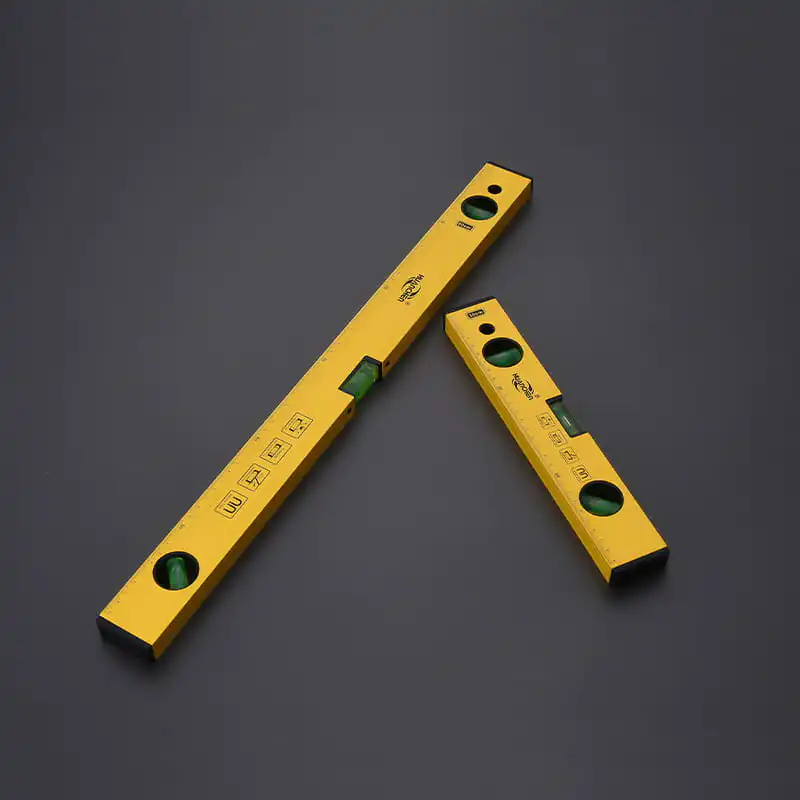
●Plastic spraying surface treatment ●Wall thickness 0.8 mm ●Better surface gloss and stronger ●180° 90° 45° 3 angles blisters ●High light transmittance, high definition level bubble ●Bottom with an in...
See Details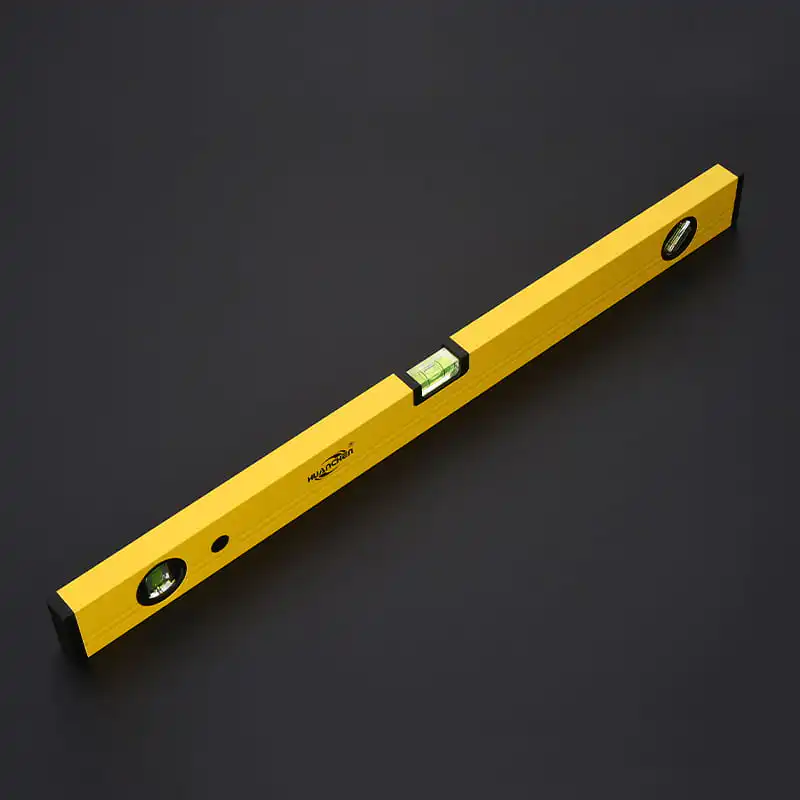
● Plastic spraying surface treatment Better surface gloss and stronger ● Left and right wall thickness 1.0mm ● Bottom milling and leveling finishes for more accurate precision ● Leveling accuracy 0.5...
See Details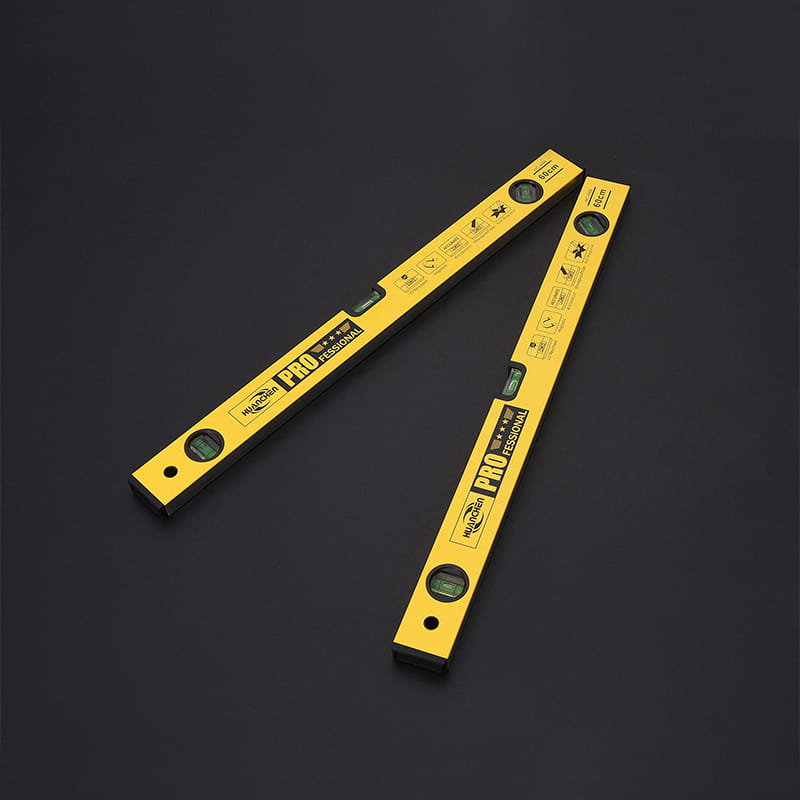
● Plastic spraying surface treatment Better surface gloss and stronger ● Left and right wall thickness 1.0mm lower bottom surface thickness 1.25mnm ● Milled bottom and level is more accurate precisi...
See Details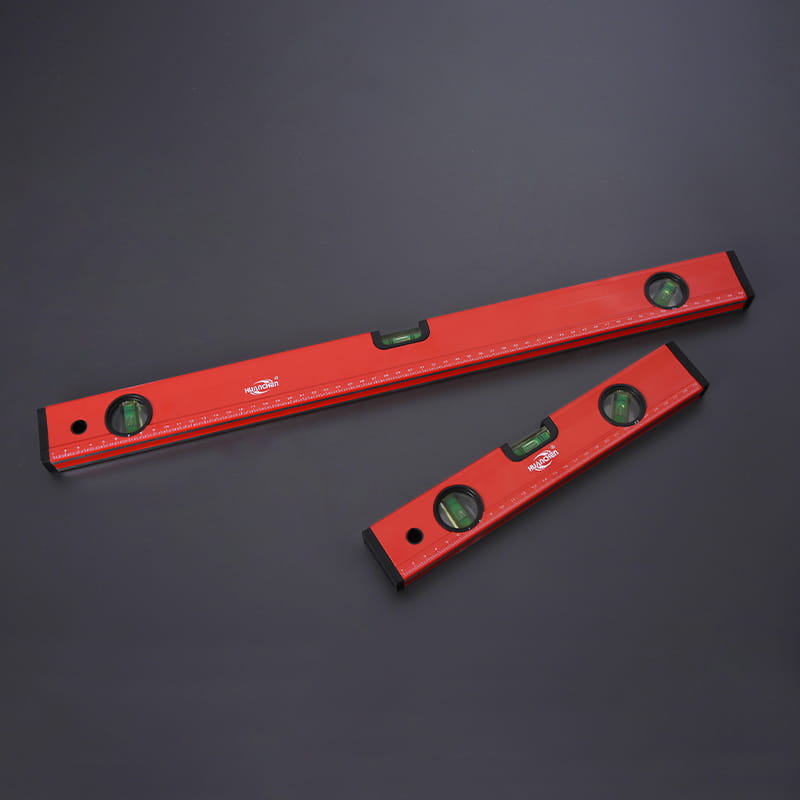
● Plastic spraying surface treatment better surface gloss and stronger ● Left and right wall thickness 0.8mm, upper wall thickness 0.8mnm, lower bottom thickness 1.2mm ● Bottom milling and leveli...
See Details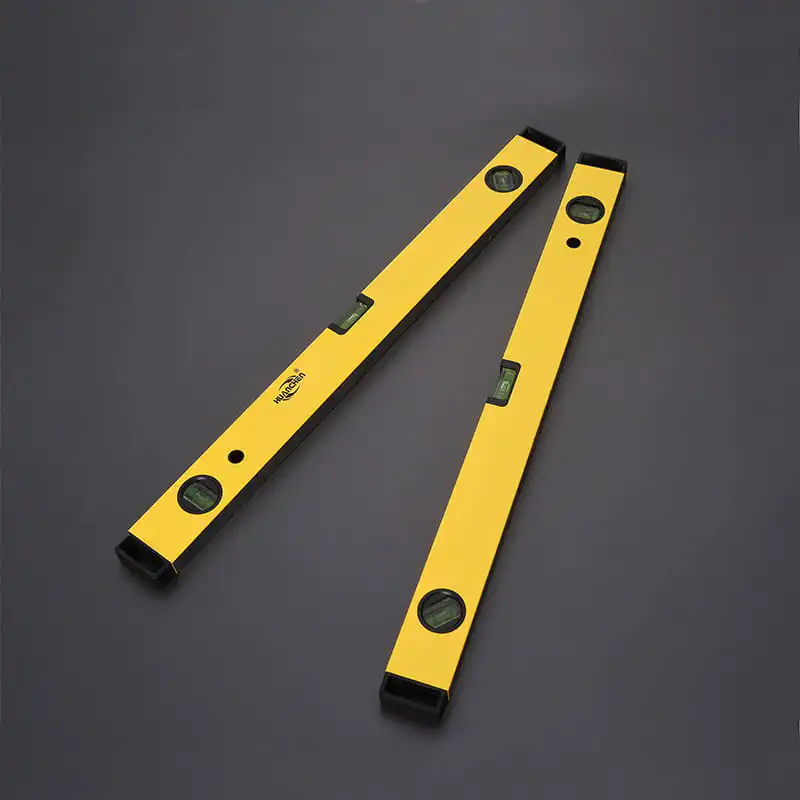
● Plastic spraying surface treatment Better surface gloss and stronger ● Left and right wall thickness 1.0mm ● Bottom milling and leveling finishes for more accurate precision ● Leveling accuracy 0...
See Details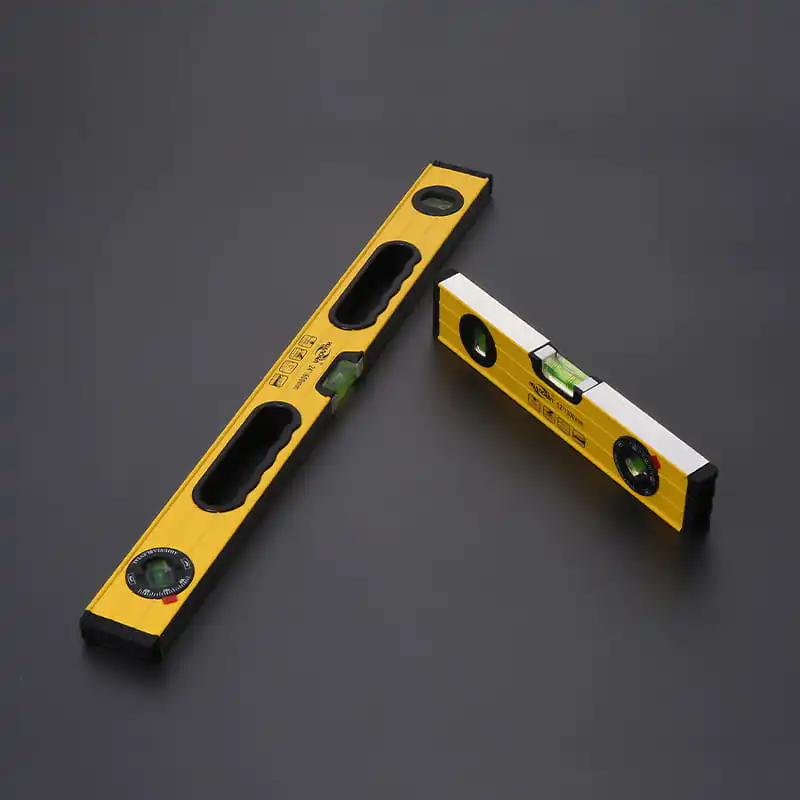
● Plastic spraying surface treatment Better surface gloss and stronger ● Left and right wall thickness 1.0mm lower bottom surface thickness 1.3mnm ● 300mm-400mm without grip, 500mm with single grip,6...
See Details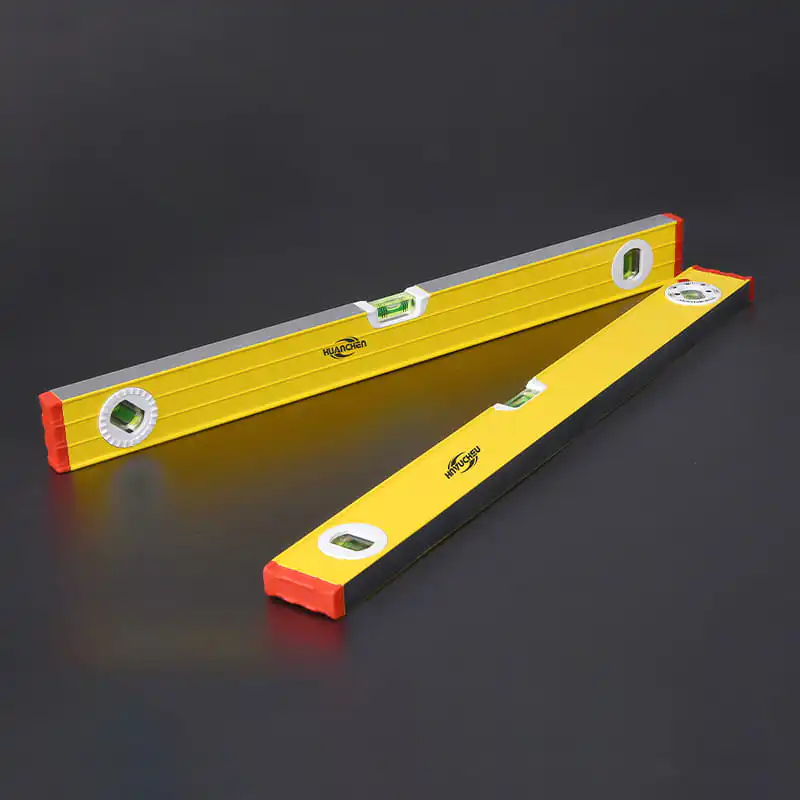
● Plastic spraying surface treatment Better surface gloss and stronger ● Left and right wall thickness 1.0mm lower bottom surface thickness 1 .3mnm ● 300mm- 400mm without grip, 500mm with single gr...
See Details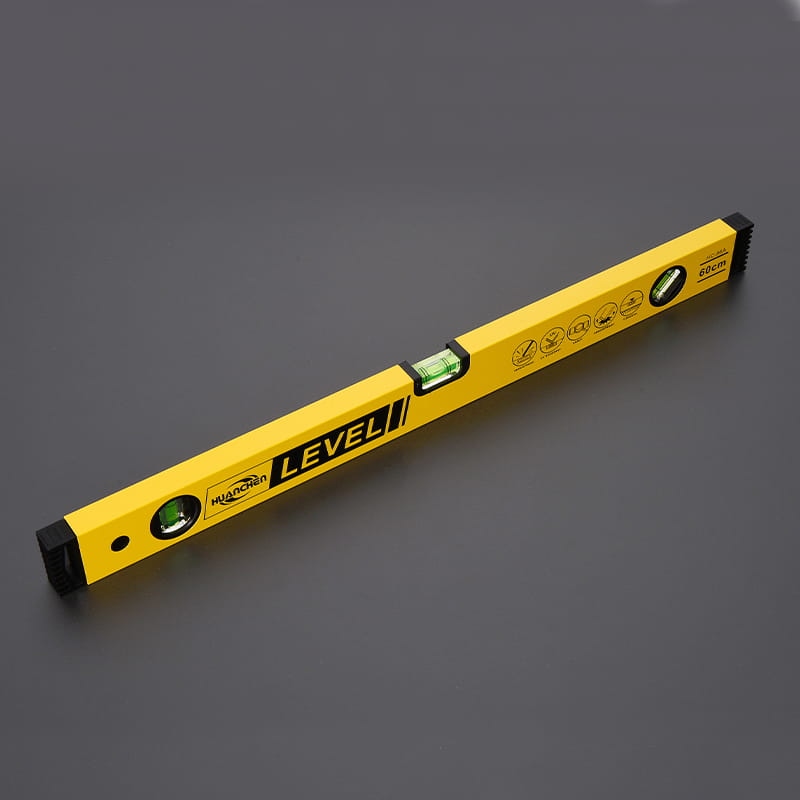
● Plastic spraying surface treatment, better gloss, more solid ● Thickness of left and right wall 1.0mm, thickness of the bottom surface 1.25mm ● Lower bottom surface milling and leveling finishing ...
See Details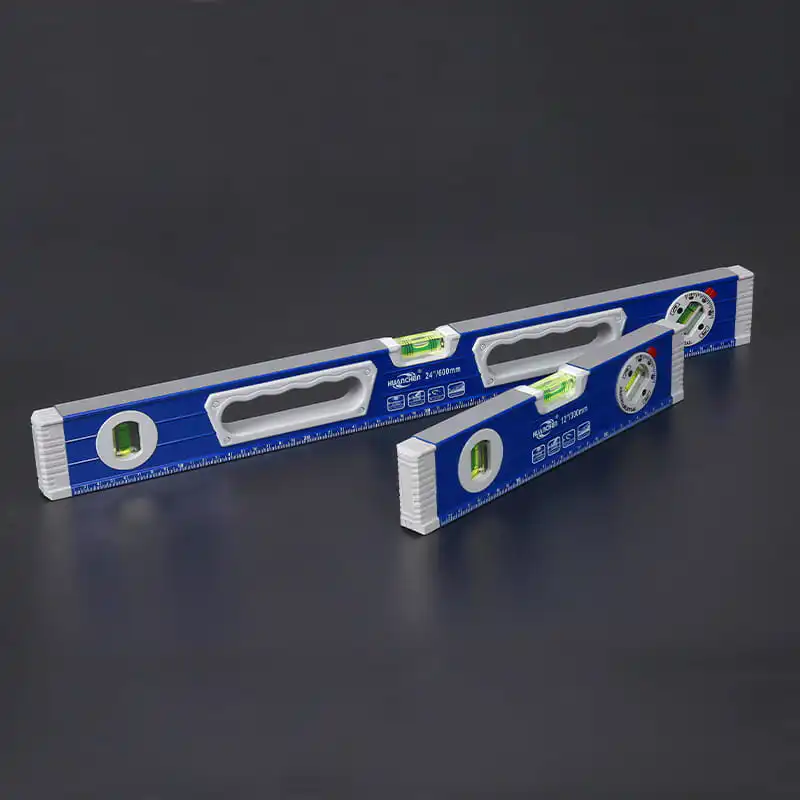
● Plastic spraying surface treatment Better surface gloss and stronger ● Left and right wall thickness 0.9mm lower bottom surface thickness 1.3mnm ● 300mm- 500mm without grip, 500mm with single grip,...
See Details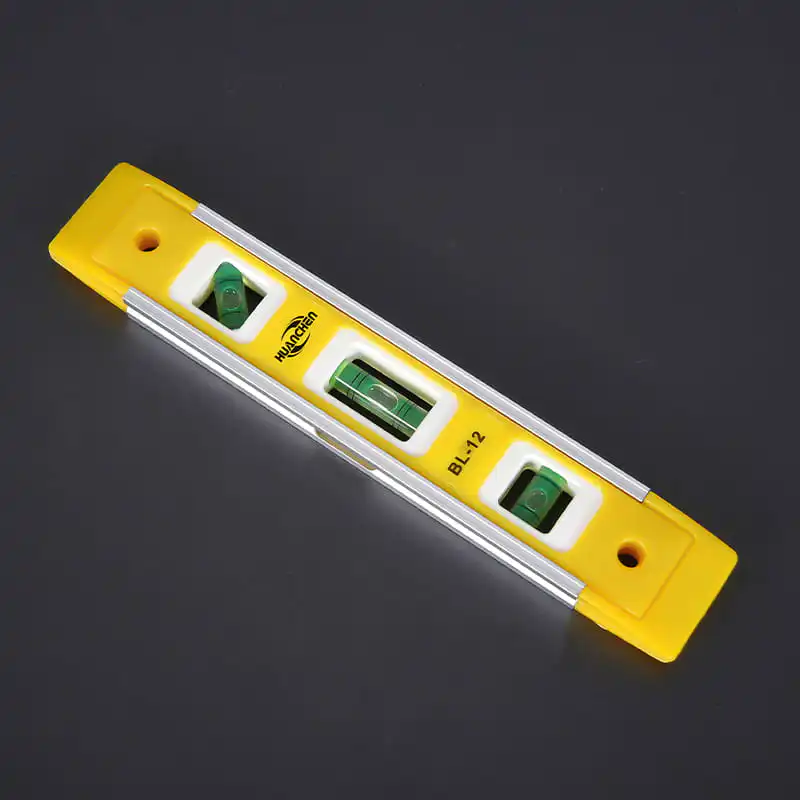
● Aluminum body covered with plastic parts for protection ● 3 leveling bubbles for multi-angle measurements ● Magnetic strip on the bottom
See Details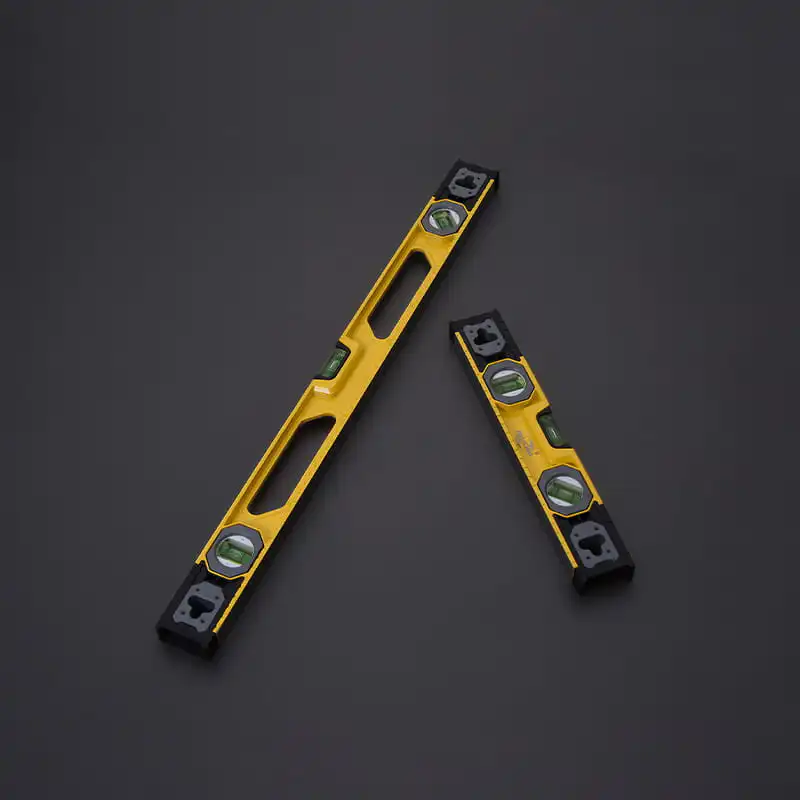
● Plastic spraying surface treatment Better surface gloss and stronger ● Middle aluminum thickness 2.7mm ● I-beam aluminum, more stable structure ● Soft rubber end caps to protect the level ● Three-di...
See Details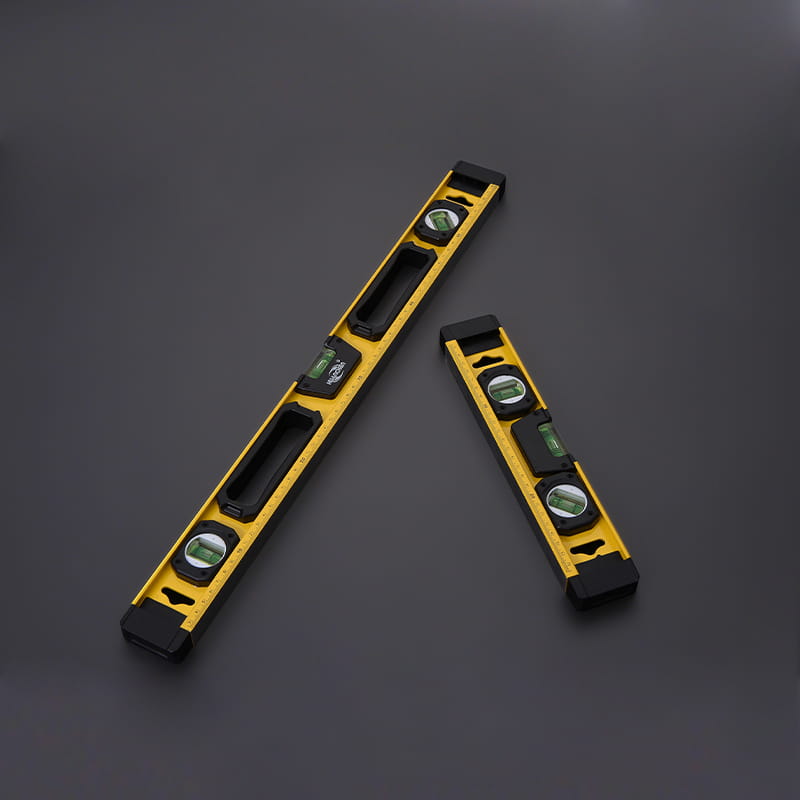
● Plastic spraying surface treatment Better surface gloss and stronger ● Middle aluminum thickness 2.7mm ● I-beam aluminum, more stable structure ● Soft rubber end caps to protect the level ● Three-di...
See Details

GET A FREE QUOTE
+86 13646662299
Copyright © 2023 Ningbo Huanchen Tools Co., Ltd.  High precision bubble level Manufacturers